Es mostren els missatges amb l'etiqueta de comentaris activitats de formació permanent. Mostrar tots els missatges

COMUNITAT DE PRÀCTICA AICLE. CENTRES DE PRIMÀRIA I SECUNDÀRIA

http://aiclecomunitatdepractica.wikispaces.com/

Des de l'any 2010, hem anat realitzant diferents edicions de la Comunitat de Pràctica AICLE amb l'objectiu de potenciar la col.laboració entre professorat que imparteix àrees no lingüístiques en llengua anglesa. 

A partir de l'anàlisi i la reflexió del nostre treball a l'aula, dissenyem noves propostes de treball sota els principis de l'aprenentage en AICLE i les possibilitats i recursos que ens ofereixen els entorns virtuals i les aplicacions 2.0. 

Una bona oportunitat per compartir experiències, aprendre entre iguals i enriquir i millorar les nostres propostes d'aula.

Ja tenim oberta per a la inscripció, una nova edició d'aquesta activitat formativa. 
Aquí teniu l'enllaç a la convocatòria

ENFOCAMENT AICLE. DISSENY DE PROPOSTES DE TREBALL PER A L'AULA DE SECUNDÀRIA


At the global level European communities both individually and collectively have had to address the complex specificities of linguistic and cultural diversity. 
CLIL is central to this diversity whilst remaining constant in its drive to integrate both subject and language learning.
Integration is a powerful pedagogic tool which aims to safeguard the subject being taught whilst promoting language as a medium for learning as well as an objective of the learning process itself. (Coyle, 2002: 27)


El curs constarà de sessions presencials per treballar els fonaments teòrics AICLE així com la planificació d'unitats didàctiques de diferents àrees per a la seva aplicació a l'aula amb l'ús de diferents eines i aplicacions 2.0.
Hi haurà una fase de treball a distància mitjançant entorns virtuals que potencien el treball col.laboratiu per el seguiment de les propostes de treball.  Enllaç a la convocatòria


Oriol Pallarésés actualment director de l'EOI de Cornellà de Llobregat, professor associat del Departament de didàctica de la llengua i la literatura a la UAB i formador del professorat.

Andrew Sampson, director de International House de Palma de Mallorca

Montse González, assessora de llengües estrangeres del CEP d'Eivissa i formadora del professorat.

NOVES ACTIVITATS: ORAL SKILLS I ENFOCAMENT AICLE

Ja tenim obertes per a la inscripció les primeres activitats formatives del programa de llengües estrangeres:

-Quatre activitats de millora de la llengua anglesa, nivells intermedi i avançat.

                                                                                               (Cliqueu per veure les convocatòries)


MILLORA DE LA DESTRESA ORAL EN LLENGUA ANGLESA. NIVELL INTERMEDI

Amb la finalitat de desenvolupar i millorar la competència comunicativa a nivell del professorat, en aquest curs oferirem recursos i estratègies  mitjançant la tècnica de "Role playing" que ajudaran també a fomentar la interacció oral entre l'alumnat a les nostres aules.


El ponent, Ben Clark, és un reconegut poeta i traductor guanyador de diferents premis literaris i amb una gran experiència impartint seminaris i tallers de creació a Espanya, Mèxic, República Dominicana, Uruguai i el Regne Unit.

ENFOCAMENT AICLE. DISSENY DE PROPOSTES DE TREBALL PÈR A L'AULA D'INFANTIL I PRIMÀRIA

CONVERSA EN ANGLÈS: TALLER D'ART


Oral Skills


Enguany hem iniciat una nova modalitat formativa amb l'objectiu de potenciar les habilitats comunicatives en llengua anglesa entre el nostre professorat.
 Es tracta de la realització de  tallers on s'utilitza l'anglès com a llengua vehicular en la comunicació oferint l'oportunitat d'emprar la llengua en contextos reals.


El Taller d'Art ha consistit en la realització de dues sessions diferenciades: 

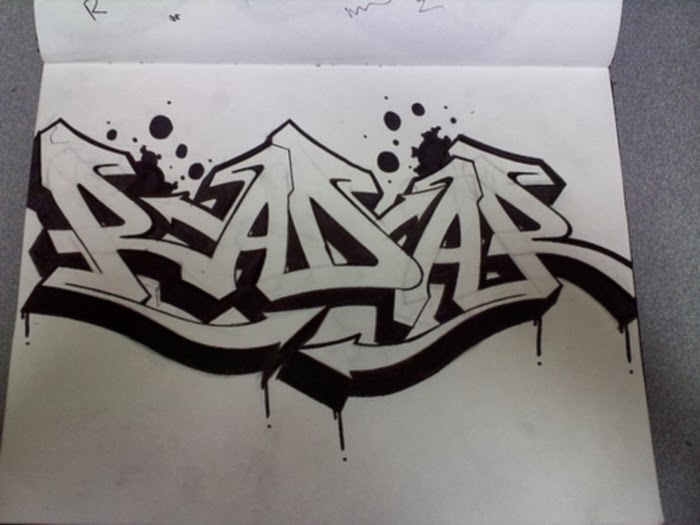
"Urban ART", impartit per Aida Miró i

  "Pottery Workshop" per Gerry Clark


CONSTRUINT COMUNITATS AICLE I XARXES DE PROFESSORAT

How do we understand CLIL?

The basis of CLIL is that content subjects are taught and learnt in a language which is not the mother tongue of the learners.
  • Knowledge of the language becomes the means of learning content
  • Language is integrated into the broad curriculum
  • Learning is improved through increased motivation and the study of natural language seen in context. When learners are interested in a topic they are motivated to acquire language to communicate 

  • CLIL is based on language acquisition rather than enforced learning
  • Language is seen in real-life situations in which students can acquire the language. This is natural language development which builds on other forms of learning
  • CLIL is long-term learning
  • Fluency is more important than accuracy and errors are a natural part of language learning. Learners develop fluency in English by using English to communicate for a variety of purposes


COMMUNITIES OF PRACTICE


Knowledge of any field is too complex to any individual to cover and therefore they need to interact with colleagues to benefit from stimulation and thus creates a community of practice;

Communities of practice are groups of people who share a passion for something that they know how to do, and who interact regularly in order to learn how to do it better.


To be able to connect the communities of practice with knowledge strategy, Wenger defines three elements.


Domain: the area of knowledge that brings the community together, gives it its identity, and defines the key issues that members need to address. A community of practice is not just a personal network: it is about something. Its identity is defined not just by a task, as it would be for a team, but by an ”area” of knowledge that needs to be explored and developed.

Community: the group of people for whom the domain is relevant, the quality of the relationships among members, and the definition of the boundary between the inside and the outside. A community of practice is not just a web site or a library; it involves people who interact and who develop relationships that enable them to address problems and share knowledge.

Practice: the body of knowledge, methods, tools, stories, cases, documents, which members share and develop together. A community of practice is not merely a community of interest. It brings together practitioners who are involved in doing something. Over time, they accumulate practical knowledge in their domain, which makes a difference to their ability to act individually and collectively.
These three elements in combination are what enable a community of practice to manage knowledge.
Knowledge management is a strategic activity and it starts with strategy and ends with strategy. It connects strategy to performance through knowledge.
The doughnut model should not be seen as a chronological sequence of steps.

The development of communities of practice is a bottom-up process as well as a top-down process. 

Etienne Wenger, Knowledge management as a doughnut: Shaping your knowledge strategy through communities of practice.